Platform foundations
Standards, SDKs, templates, service foundations, and platform capabilities that turn repeated complexity into reusable delivery paths.
I build the reusable systems, standards, and platform capabilities that help engineering teams move faster with less ambiguity and stronger control.
About
I work across platform engineering, architecture, infrastructure, developer experience, and secure delivery, with a focus on making complex environments easier to reason about and safer to scale.
Standards, SDKs, templates, service foundations, and platform capabilities that turn repeated complexity into reusable delivery paths.
Secure defaults and clear control surfaces that reduce cognitive load without taking ownership away from engineering teams.
Practical architecture that links deployment paths, operating models, service ownership, governance, and business outcomes.
“If your users haven’t built something that surprised you, you probably didn’t build a platform.”
What I Focus On
Reusable foundations, templates, SDKs, and standards that reduce cognitive load for engineering teams.
Secure defaults, governed autonomy, and delivery paths that make the right engineering choice the easiest one.
Architecture that clarifies decisions, improves delivery, and connects execution to long-term organisational capability.
Current Shape
My work sits where strategy meets implementation: the platform standard, the delivery workflow, the control surface, the service boundary, and the operating model that decides whether engineering can scale safely.
Connecting day-to-day engineering execution with enterprise architecture, governance, ownership, and business outcomes.
Internal platforms, CI/CD, SDKs, templates, paved roads, and developer self-service that scale beyond one team.
Cloud foundations, secure defaults, delivery controls, telemetry, readiness practices, and cost-aware operations.
Project Cognition
Understand the organisational intent, operating model, constraints, governance, and business outcome before choosing the technical shape.
Translate capability into service boundaries, integration points, risk controls, ownership, and delivery options that teams can reason about.
Turn repeated decisions into standards, SDKs, templates, secure defaults, and platform capabilities that reduce cognitive load.
Build close to the code, validate assumptions early, and make design choices visible through working delivery paths.
Carry decisions into CI/CD, observability, readiness, security controls, cost, support, and service ownership.
Use delivery evidence, incidents, friction, and team feedback to improve the platform and strengthen enterprise capability.
Projects
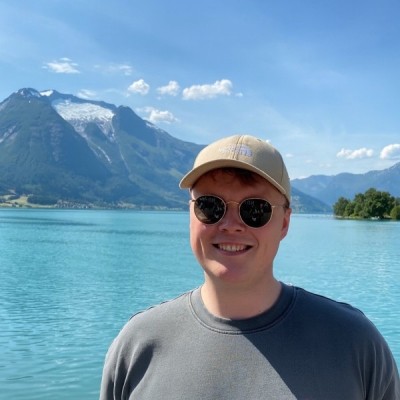
I am a Principal Engineer who started in first-line support and developed through service desk, engineering projects, CloudOps, and infrastructure. Combined with a degree in International Relations and Politics, that gives me a strategic eye and a practical understanding of how technology lands with teams, services, and organisations.
Shaped migration strategy and implementation paths for moving legacy capability into Azure, balancing service continuity, security controls, platform readiness, and operational ownership.
Produced a POC IDP focused on delivering value quickly: proving self-service workflows, reusable templates, and paved-road deployment patterns before committing to full platform scale.
Created an IDP model designed for horizontal capability scaling, giving teams repeatable foundations for building, deploying, operating, and governing services without central bottlenecks.
Deployed and supported engineering platforms on Kubernetes, including CloudBees and monitoring stacks built around Prometheus, Grafana, and related operational tooling.
Architected capability for identity management, SSO, and application enablement through templated Python projects with Docker support, CI/CD, and Kubernetes manifests built in.
Built experience supporting global applications, working with chase-the-sun teams, international stakeholders, and globalised entry systems where reliability and communication mattered as much as code.
Tooling
Enterprise Architecture
I want to move further into enterprise architecture because the work I value most sits above any single service, platform, or implementation choice: clarifying capability, ownership, governance, and the operating model that lets engineering scale with intent.
Move from shaping individual platforms and delivery paths into defining the enterprise capabilities they support.
Connect business intent, governance, operating models, and technical strategy so architecture decisions stay executable.
Use deep platform engineering experience to make enterprise architecture practical, testable, and grounded in delivery evidence.
Map business outcomes, value streams, services, platforms, data, and ownership so technical decisions connect to enterprise intent.
Create standards, guardrails, decision records, risk controls, and architecture principles that help delivery rather than slow it down.
Clarify who owns the capability, who operates it, how teams consume it, and where autonomy needs a clear control surface.
Use delivery data, incidents, cost, security posture, and developer friction to evolve standards from observed reality.
Inspirations
His writing on open source culture connects to the way platforms grow through participation, feedback, and useful defaults.
His work on architecture, integration, and platform thinking reflects the kind of practical enterprise architecture I value.
A model for deep technical clarity, performance awareness, and the habit of reducing hard problems to executable reality.
Represents elegant technical design that makes powerful capability accessible, useful, and enjoyable for real people.
Linux shows how strong technical stewardship and modular architecture can create durable capability at global scale.
C and Unix shaped the engineering foundations behind modern systems: simple abstractions, composability, and operational control.
His work helps frame AI as a system of goals, constraints, uncertainty, and alignment rather than just tooling.
Bridges computer science, AI, and pragmatic engineering in a way that values clarity, evidence, and useful implementation.
Useful for thinking about ideals, governance, knowledge, and the gap between abstract models and lived institutions.
Relevant to architecture as a control problem: authority, incentives, risk, and why systems need explicit operating rules.
A reminder that organisations are shaped by interests, power, trade-offs, and constraints, not just rational design.
His structural view of international systems maps neatly to enterprise thinking: behaviour is shaped by the system around it.
Ian Anderson’s work at The Designers Republic turns systems, grids, noise, compression, and industrial graphics into something precise but alive. I chose that influence for this site because it matches the way I think about platform engineering: structured, opinionated, technical, slightly confrontational, and built around clarity under pressure rather than soft decoration.
AI and the New Age
I believe AI will change the horizon for enterprise architecture and platform engineering. The opportunity is enormous, but so are the new questions around trust, operating models, data boundaries, capability ownership, governance, and how organisations avoid turning experimentation into unmanaged risk.
AI is not just another tool in the stack. It changes how organisations think about knowledge work, automation, decision support, governance, integration, and the platforms needed to make those capabilities safe and repeatable.
The next horizon is not isolated AI experiments, but governed platforms that let teams use AI with identity, policy, observability, data boundaries, cost controls, and delivery workflows built in from the start.
Reading Russell, Norvig, and Goodfellow reinforces that modern AI remains mathematical modelling at scale. It can reason impressively in form, but it can also behave like a stochastic parrot. Organisations need ambition, but also humility.
I am also interested in what comes after today’s dominant von Neumann-style input/output model: neuromorphic computing, Turing-esque questions about machine behaviour, and whether something closer to a living intelligence is possible rather than a system that only simulates thought through prediction.
Contact
I’m interested in secure delivery, reusable engineering systems, practical architecture, and platform teams that create durable leverage.